
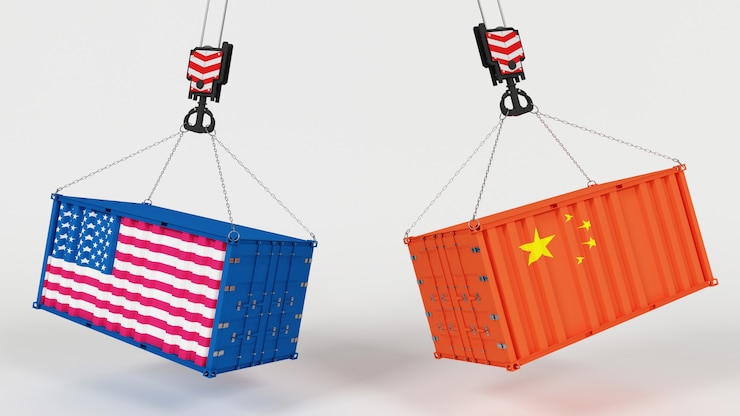
How US China Tariffs Are Affecting Imports and Prices
How US China Tariffs Are Affecting Imports and Prices the economic relationship between the United States and China has been one of the most significant drivers of global trade in the 21st century. However, the introduction of tariffs between these two economic giants has added an element of unpredictability to the international market. The ongoing trade tensions and the implementation of tariffs have caused widespread consequences, particularly concerning imports and consumer prices. The US China tariff impact on imports is profound and far-reaching, touching various sectors and influencing prices on a global scale. This article explores how these tariffs are reshaping the landscape of international trade, highlighting the ripple effects on import levels, manufacturing costs, and prices consumers pay for everyday goods.
The Genesis of US China Tariffs
The U.S. sought to address trade imbalances and alleged unfair practices, such as intellectual property theft, forced technology transfers, and subsidies to Chinese industries. In retaliation, China imposed tariffs on U.S. goods, setting off a cascade of measures that disrupted supply chains, inflating costs, and prompting shifts in trade patterns.
While tariffs have been a tool of economic policy for centuries, the scope and scale of the US China tariff impact on imports in recent years are unprecedented. At their peak, tariffs affected hundreds of billions of dollars in trade, resulting in higher prices for a vast array of goods, ranging from electronics to agricultural products. As the tariffs evolved, both nations saw economic disruptions, sparking debates about the long-term sustainability of this trade war.
The Direct Impact on Imports
The most immediate effect of the tariffs has been a dramatic shift in the flow of importsThe US China tariff impact on imports has been most apparent in sectors where China has been a dominant supplier to the U.S. economy. Electronics, machinery, textiles, and consumer goods have all experienced disruptions in price and availability as a result of these tariffs.
Many companies relying on Chinese imports have faced higher costs, which they have often passed on to consumers in the form of increased prices. This increase has been particularly noticeable in industries like electronics, where products such as smartphones, televisions, and computers, often manufactured in China, have seen a noticeable price hike. Companies like Apple, for example, have acknowledged the financial burden placed on their supply chains due to tariffs on Chinese-made components.
In some cases, businesses have attempted to circumvent the tariffs by shifting their supply chains to other countries. Southeast Asia, for instance, has emerged as a popular alternative to China for manufacturers looking to maintain cost efficiency. However, while such shifts help mitigate some of the tariff impact, they do not always offer a seamless transition. Production costs in other countries can still be high, and quality control can become more complicated.
The Ripple Effect on Prices
The US China tariff impact on imports extends beyond the immediate price increase of the affected products. As tariffs increase the cost of imported goods, it inevitably leads to a ripple effect throughout the economy. For example, manufacturers in the U.S. that rely on Chinese components for their products must either absorb the added costs or pass them on to consumers. This has led to price hikes across a wide range of goods, including machinery, electronics, clothing, and even food products.
The increased cost of imports does not only affect high-end goods. Everyday items, such as household goods and even foodstuffs, have become more expensive due to the tariffs. Tariffs on agricultural products like soybeans, pork, and dairy have made these goods costlier for consumers. For example, Chinese tariffs on U.S. pork have resulted in higher prices for bacon and other pork products in supermarkets. These price increases can disproportionately affect lower-income households, which tend to spend a higher percentage of their income on food and basic goods.
Furthermore, as tariffs raise costs for American businesses, some companies have been forced to reconsider their pricing strategies. While some businesses are reluctant to raise prices, others are not as cautious, leading to significant inflationary pressures. The price hikes affect both imported goods and domestically produced items that rely on imported materials. This indirect effect of tariffs underscores the complex web of global supply chains and their vulnerability to trade disruptions.
The Impact on American Businesses and Manufacturers
The US China tariff impact on imports has not been limited to consumer goods alone. American manufacturers have faced significant challenges as well. In many sectors, U.S. manufacturers rely on Chinese-made components to assemble their products. The imposition of tariffs has disrupted these supply chains, making the production process more expensive and less efficient. For example, industries such as automotive manufacturing and tech startups, which depend on specific electronic components from China, have seen production delays and higher input costs.
For smaller businesses, the tariff impact can be especially devastating. Unlike large corporations, which can afford to absorb higher costs or shift their supply chains, small and medium-sized enterprises (SMEs) often struggle to manage the financial burden imposed by tariffs. This has led to some businesses downsizing or, in extreme cases, shutting down altogether. Additionally, companies that rely on Chinese exports to the U.S. have found their market share dwindling due to retaliatory tariffs imposed by China.
In response, some U.S. manufacturers have sought alternative sources of production, but the transition is far from straightforward. While countries such as Vietnam, Thailand, and India offer attractive alternatives, the costs of shifting supply chains and setting up new manufacturing plants are substantial. These challenges demonstrate the long-term nature of the economic shifts caused by tariffs, highlighting the difficulty of decoupling from a major trading partner like China.
The Role of the Global Supply Chain
Global supply chains are intricate and interdependent, with many countries relying on each other for the production of goods. The US China tariff impact on imports has not only affected the U.S. and China but has also reverberated throughout the global economy. As tariffs between the U.S. and China increased, other countries in the supply chain were forced to adjust.
For instance, many companies in other regions, such as Mexico and Southeast Asia, have found themselves caught in the crossfire of the tariff dispute. These countries have been forced to navigate the new trade environment, adjusting their own tariffs and trade policies to accommodate changes in global demand. While some nations have benefited from the shifting of manufacturing and trade routes, the overall disruption to global supply chains has raised costs for businesses and consumers worldwide.
Moreover, the economic uncertainty stemming from the trade war has led to a decline in business investment. Companies are less likely to commit to long-term projects or investments when they cannot predict future trade policies or market conditions. This hesitation to invest further exacerbates the economic downturn caused by the tariffs and undermines long-term economic growth.
The Future of US China Tariffs
As the world watches, the trajectory of US China tariff impact on imports remains uncertain. With the signing of the Phase One trade deal in early 2020, there was hope that some of the tariffs would be lifted or reduced. However, the complexities of the trade relationship between the two countries suggest that a full resolution is unlikely in the near future.
Both sides have entrenched positions on various issues, from intellectual property rights to market access. Even as the U.S. and China continue negotiations, it is clear that the tariffs will continue to play a prominent role in shaping the global economy. It is also likely that the tariffs will be adjusted over time as both nations seek to balance the economic consequences with their broader strategic goals.
The US China tariff impact on imports has reshaped the global economic landscape, creating significant disruptions in trade flows, increasing the cost of goods, and altering the dynamics of global supply chains. For businesses and consumers alike, the tariffs have introduced new challenges and risks. While some industries have successfully adapted to the shifting landscape, others continue to struggle with the consequences of these trade measures.
As the world grapples with the long-term effects of the tariff dispute, the need for multilateral solutions to trade tensions has never been more pressing. The resolution of the US China tariff impact on imports will require cooperation, flexibility, and a recognition of the interconnectedness of the global economy. The path forward may be uncertain, but the effects of these tariffs will be felt for years to come.