
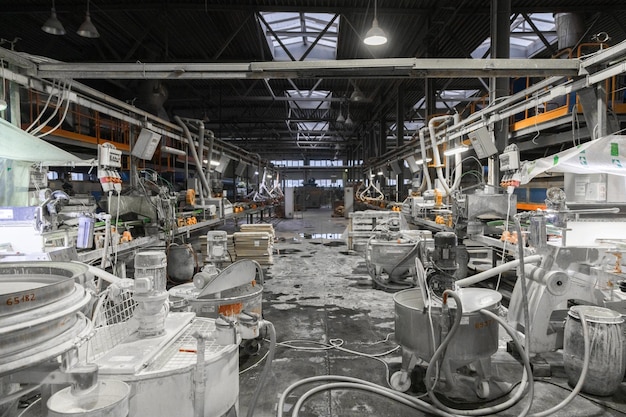
The Future of Business Factories in a Digital Economy
As the world shifts toward an increasingly digital economy, the landscape of manufacturing is evolving at a rapid pace. Traditional business factories, once reliant on manual labor and straightforward production processes, are now on the brink of a technological revolution. The digital tools, automation systems, and innovative strategies that characterize the tech-driven factory are reshaping the way products are made, distributed, and consumed. With these advancements, the future of business factories in the tech era looks nothing short of transformative.
The Rise of Smart Manufacturing
In the near future, factories will be anything but traditional. The factory floors of tomorrow will be equipped with advanced technologies such as Artificial Intelligence (AI), Internet of Things (IoT) devices, robotics, and data analytics. These technologies will enable factories to operate with unprecedented levels of precision and efficiency. The integration of AI into manufacturing processes, for instance, will allow factories to predict machine failures before they occur, leading to less downtime and more efficient production cycles. This type of predictive maintenance is just one example of how digital tools are driving future-ready manufacturing.
Moreover, sensors and smart devices will connect machines in ways that allow for real-time communication across the production line. This seamless interaction will improve decision-making, speed up processes, and increase overall production efficiency. A factory that can react in real time to fluctuating demand or equipment malfunctions will be able to remain agile in an unpredictable world, ensuring that production is both high-quality and cost-effective.
The Impact of Automation on Labor
One of the most talked-about aspects of the digital economy is the shift toward automation. As robots take over more repetitive, dangerous, and time-consuming tasks, human workers will increasingly focus on roles that require problem-solving, creativity, and innovation. This shift won’t eliminate jobs entirely but will instead lead to the evolution of the factory workforce. In a tech-driven factory, the emphasis will be on high-skill, high-value work, with a premium placed on workers who can operate, maintain, and optimize automated systems.
In the future-ready manufacturing environment, factory workers will likely need a higher level of technical proficiency. As automation and AI become more integrated, workers will need to learn how to manage and troubleshoot complex digital systems. This trend will drive the need for upskilling and continuous learning, ensuring that human labor remains an indispensable part of the manufacturing process even as machines take on more responsibility.
Data-Driven Decision Making
Another defining feature of business factories in the tech era is the way data will shape decision-making. With digital technologies, factories will have access to vast amounts of real-time data, from supply chain logistics to machine performance metrics. The ability to harness this data will be crucial for staying competitive in the digital economy. Through advanced analytics, factory managers will be able to make informed decisions about production schedules, inventory management, and even product design.
This data-driven approach will enable businesses to adopt more agile manufacturing models. For example, factories will be able to quickly adjust production processes based on real-time demand, minimizing waste and ensuring that supply meets demand more accurately. Moreover, data will help optimize supply chains, streamline operations, and enhance the customization of products, making businesses more responsive and flexible.
Sustainability and Green Technologies
As the digital economy grows, so too does the need for sustainability. Tech-driven factory strategies are not just focused on improving efficiency and productivity; they are also designed to reduce the environmental impact of manufacturing processes. In the future, business factories will increasingly rely on green technologies to minimize waste, lower energy consumption, and reduce carbon footprints. Renewable energy sources, such as solar and wind power, will play a crucial role in powering factory operations, while innovations in recycling and waste management will ensure that factories are as eco-friendly as possible.
Adopting sustainable practices not only helps the environment but also boosts a brand’s reputation among consumers who are increasingly focused on sustainability. The future of factories will be about balancing the demands for profitability with the need for environmental responsibility. As factories become more energy-efficient and waste-reductive, they will align more closely with the broader goals of a sustainable digital economy.
Customization and Flexible Production
Gone are the days when factories simply produced large quantities of a single product. In the future, the emphasis will be on highly flexible production systems that can rapidly adjust to produce different products in response to shifting consumer preferences. Advances in 3D printing, modular manufacturing, and AI-driven production systems will allow for the creation of personalized products at scale, without sacrificing efficiency.
This ability to customize on-demand will be a game-changer for industries ranging from fashion to automotive to electronics. Rather than relying on mass production, future-ready manufacturing will focus on small-batch production, offering consumers a wider range of choices and greater flexibility. The rise of mass customization will allow businesses to deliver more personalized products, meeting the increasingly diverse demands of the global marketplace.
The Role of Cloud Computing and IoT
As factories transition into the tech era, the role of cloud computing and IoT will be pivotal. Cloud platforms will allow factories to store vast amounts of data and share it seamlessly across multiple locations. This will facilitate collaboration between factories, suppliers, and customers, leading to smoother operations and faster innovation. IoT devices, on the other hand, will connect machines, inventory, and even workers to the internet, enabling smarter and more efficient manufacturing processes.
With cloud computing, businesses will also have the ability to scale their operations quickly and without significant capital investment in infrastructure. By using cloud-based systems, factories can remain flexible and adaptable, reacting quickly to changes in the market or supply chain disruptions. This technological integration is a critical component of business factories in the tech era and will allow manufacturers to stay competitive in an ever-changing landscape.
Conclusion
The future of business factories in the digital economy is undoubtedly bright, but it will require businesses to embrace change, innovation, and digital transformation. From automation to data-driven decisions, sustainability to mass customization, the tech-driven factory is poised to revolutionize how products are made and delivered. With the right strategies, factories can position themselves to thrive in this new digital world, creating opportunities for growth, efficiency, and customer satisfaction. To be truly future-ready manufacturing in the digital age, factories must be agile, adaptable, and committed to leveraging cutting-edge technologies to meet the demands of a rapidly changing marketplace.